September 21st, 2026
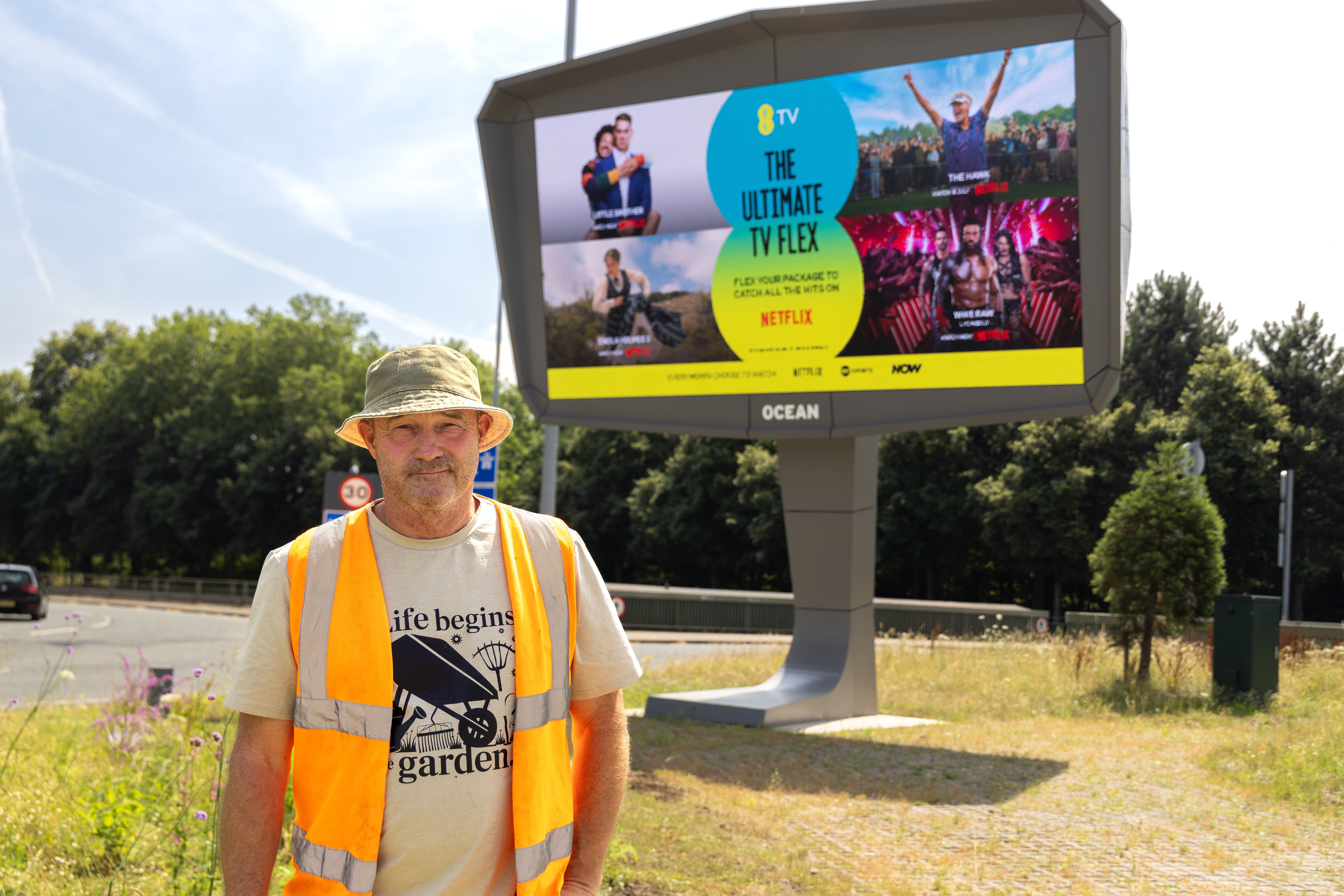
An experiment to ‘rewild’ Manchester’s Chester Road Roundabout by the outdoor advertising company Ocean Outdoor is creating a blueprint to help transform other city centre roadside locations into rich, biodiverse habitats.
Over the hottest, driest summer on record, gardeners transformed a plot of around one acre surrounding one of Manchester’s busiest interchanges from parched grass into a flowering meadow, introducing a new feeding ground and home for insects and birds.
Landscapers populated the areas surrounding three large format outdoor advertising screens with more than 150 species of high density nectar plants and perennials. Within hours, nature had moved in. Further investment is ongoing, tree offcuts from a nearby maintenance project transported to Chester Road Roundabout ready to be made into bee and bug hotels.
The project is being overseen for Ocean by Trevor Griffiths, who has been working in the outdoor industry for 43 years and with Ocean for the past 15 years maintaining Out of Home screens across England.
 Download
 Trevor said: “We’ve learned a lot from the Chester Road project. We didn’t have the time to cultivate and germinate the seeds from scratch, but we did put in perennials which gave colour and vibrancy. As soon as we started planting those in, nature started to move in – wasps, hoverflies, butterflies. There are 150 species of bee just within the Manchester area. It was phenomenal, an instant impact.
“There are two sides to the plot – 2/3rds of an acre, and the other side, less than half an acre. It is a big area. The number of people stepping in to the roundabout and taking photos of insects on the flowers was amazing. It was drawing people in. Going forward, what we would like to do is to take the grass off the top and expose the soil, gently rotovate it and sow wild flowering seeds with up to 20 different species of plant. Wild seeding just needs basic soil; they are survivors and that’s what you want because the weather we’ve had this year has been really harsh so we haven’t been able to plant out too much due to heat exhaustion.
“With wild seeding they thrive in it they really do, and we’ve spoken about making some bug and bee hotels. Recently we had to reduce some trees to able to lift some decommissioned 48 backlights out. The logs we stored I took to Chester Road ready for us to use to create a nice habitat for bugs and bees.
“Within three years it could be phenomenal. That’s how long it will really take to get to the top level. Where sites are really shady, we can plant some drought resistant species and pollinating perennials as well.
“Ocean is showing the world what can be achieved, and different technology will come through to help with all of this. I’ve never sat down with an outdoor advertising company and had these sorts of conversations. And when clients are booking screen space, this sort of work answers those questions about the site’s carbon footprint. It’s already there to see.”
In all, Ocean is working to transform 21 of its Out of Home locations into wildlife corridors alongside major highways in Southampton, Cardiff, Birmingham and the approach to London Heathrow Terminal 5.
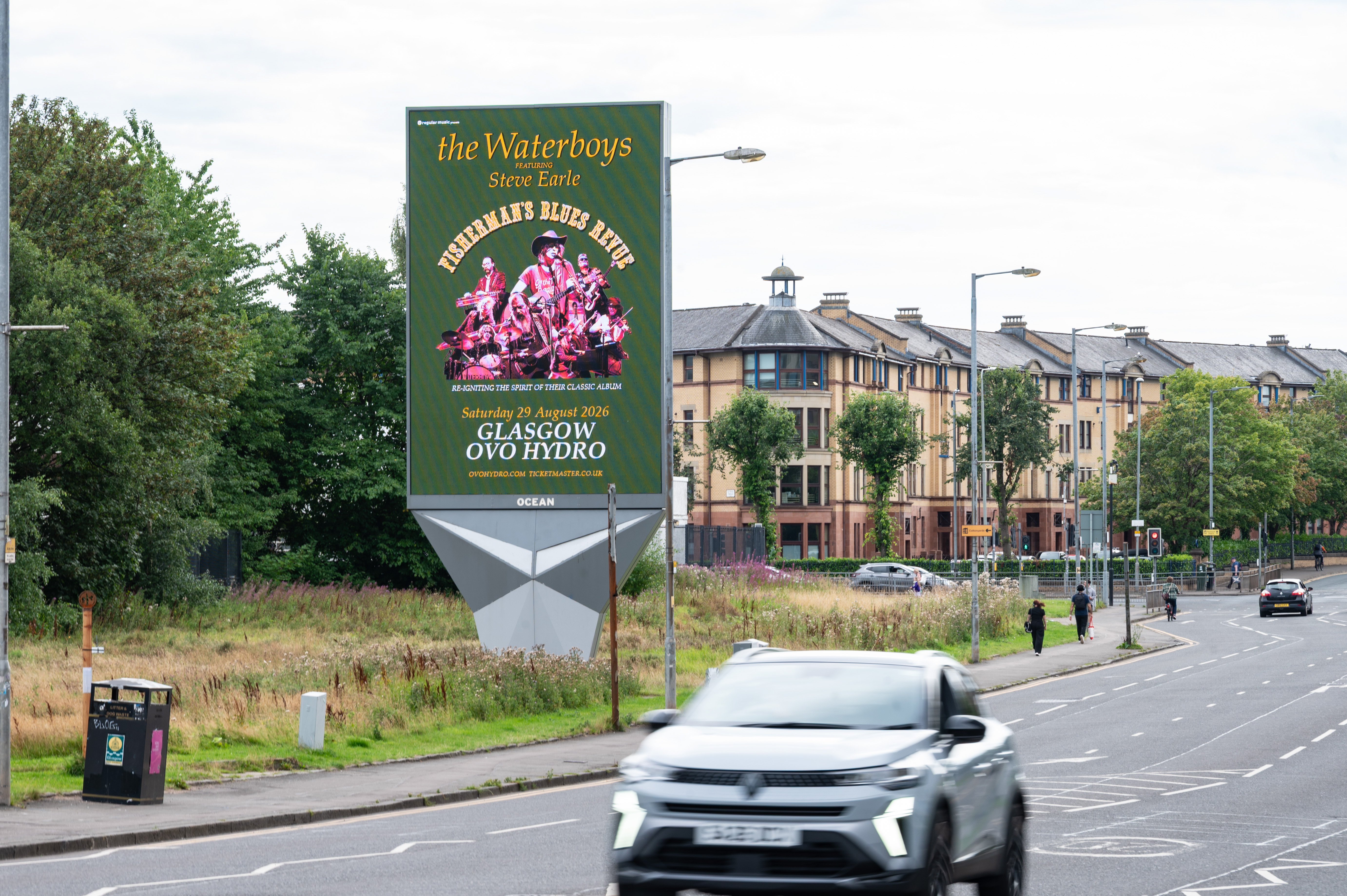
Fourteen of them are in Glasgow and Edinburgh are under the management of Ocean Scotland’s in-house estate team which has been adapting established planting to create natural habitats for several years now.
 Download
 Estates director Paul Flynn said: “We reviewed all locations suitable for ‘rewilding’ and introduced the following measures: reducing the scope of grass cutting either on full areas or by continuing to trim only an access strip; the use of wildflower ‘bombs’; reduced trimming of already established shrubs/trees; new shrub planting; and the production and installation of bee hotels.”
Ocean Scotland has also introduced ‘rewilding’ signage to address public feedback that the locations were not looking as neatly manicured as they previously were. There has however been a positive response to the North Hanover Street, Glasgow site after a bee hotel, made by foreman James Hughes, was spotted by Dundasvale Community Council.
“I explained that it had been made using recycled material and offcuts from Ocean Displays, and they have now asked James if he is happy to make another,” said Paul.
In Manchester, Ocean and Trevor hope local schools will also take an active interest and hands-on role in the establishment and care of bee and bug hotels at Chester Road Roundabout. In the future, Trevor’s ambition even stretches to bee hives.
“The worker bee is Manchester’s emblem and it would be amazing to have some bee hives on site making locally produced honey for restaurants and schools or sold for charity. It might not be possible – there’s a lot of things to take into consideration – but it’s something I’d personally love to explore and become involved with.”
Find out more about Ocean’s journey towards net zero
Share
Ocean Networks
The location is available as part of a network, please see below for details.
Please contact us on sales@oceanoutdoor.com to find out more.