June 8th, 2026
Behind the work: Ocean Studio

David Tait
Group Creative Director
David Tait, Creative Director of Ocean Studio, talks surreal goddesses, creative resonance and keeping it human.
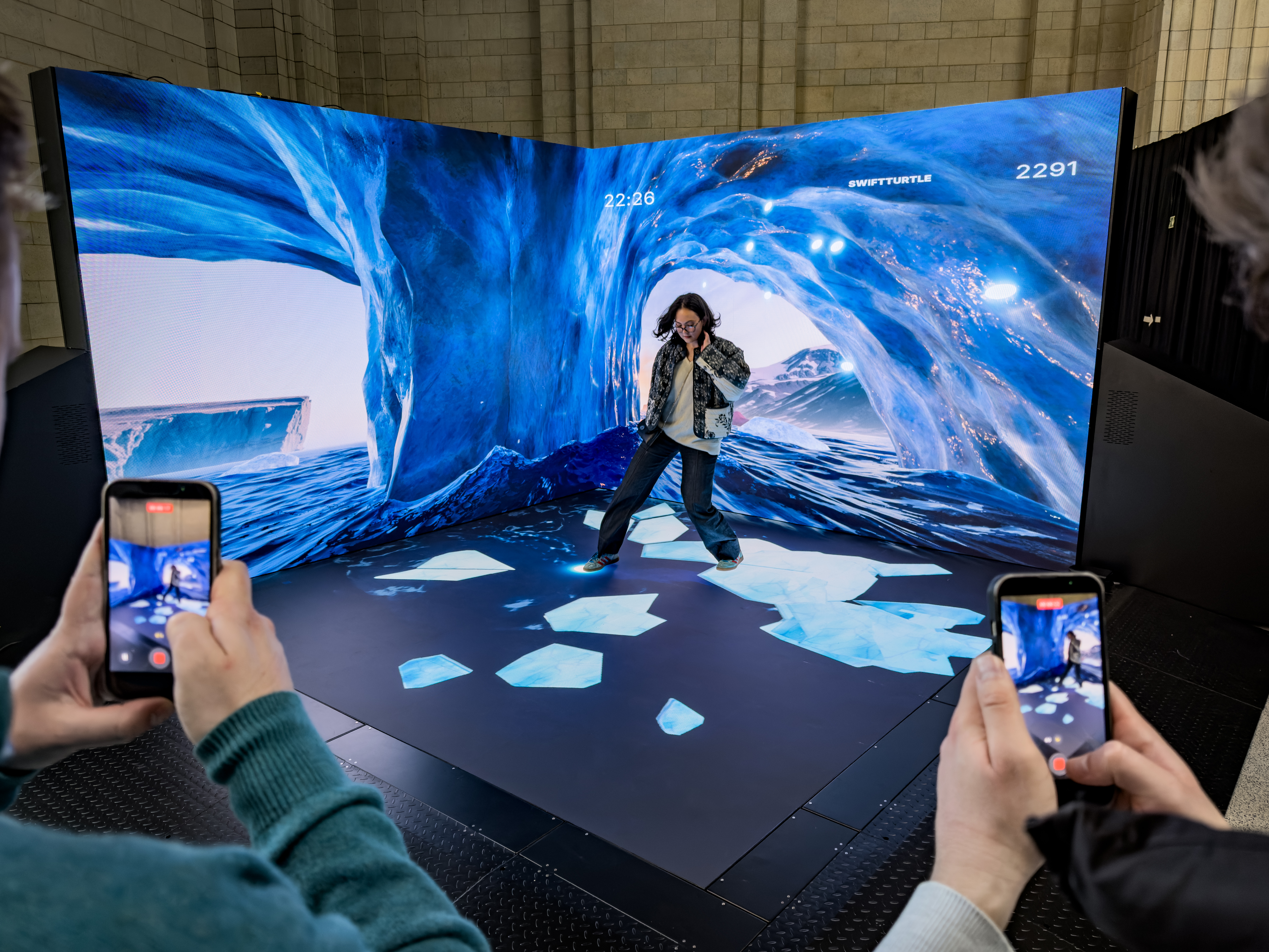
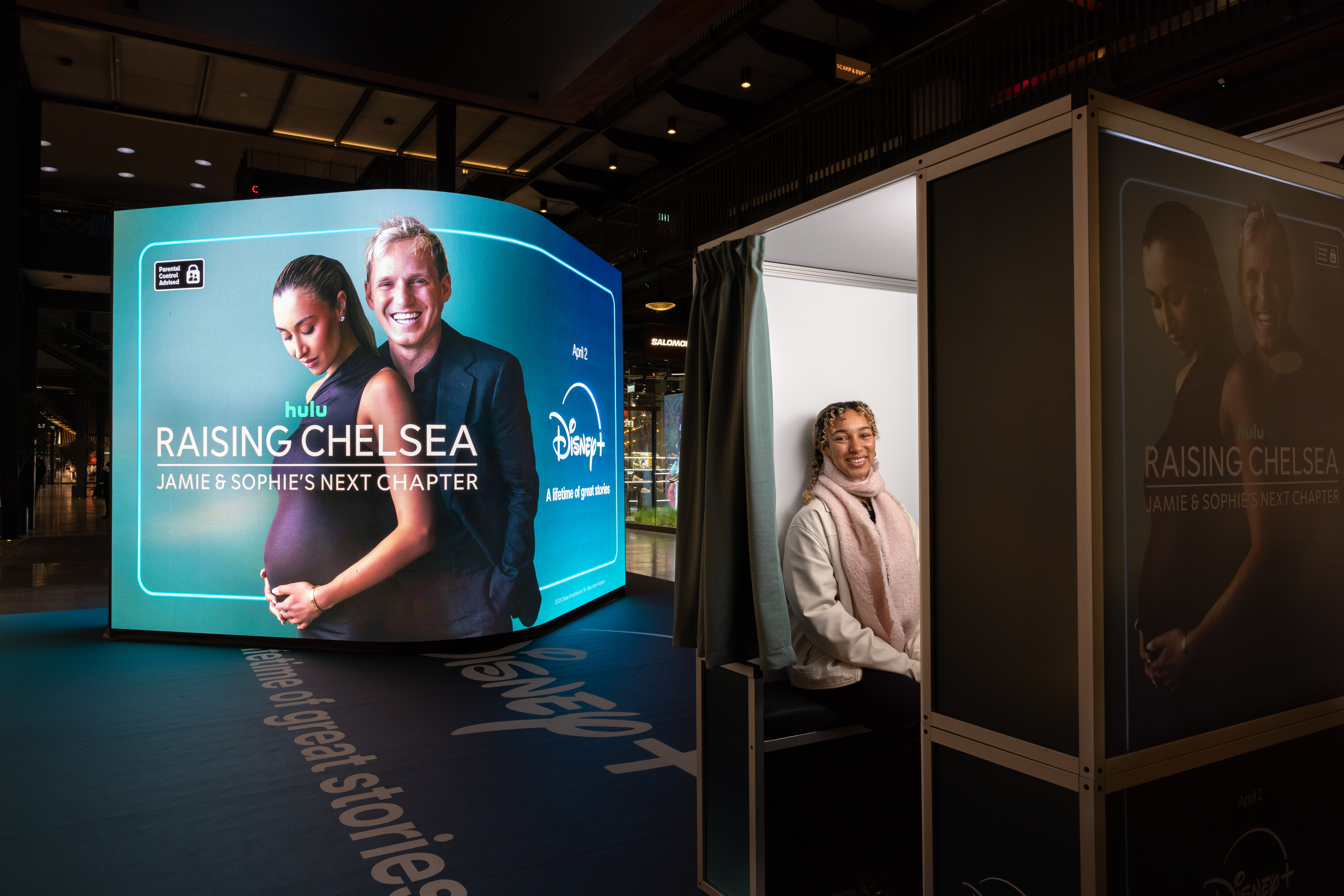
We’ve been involved in creative consultancy for a few years now because we’re constantly evolving – developing weird and wonderful Digital Out of Home (DOOH) techniques and formats. From big ceiling screens to portable formats for places where you wouldn’t normally expect to see Out of Home (OOH) screens.
At its heart, Ocean Studio is about facilitating better creative across any OOH format. Born out of an early and very obvious need to advise on – and deliver – big compelling or long form work, Ocean Studio has since evolved into a team of creatives, developers and producers who have the knowledge, skills and tools to build just about anything for our clients.
From concept to delivery, we steer brands towards the best possible use of their chosen D/OOH format, making sure any work uses the screen and its environment to the best effect. We call this The Art of Outdoor®.
 Download
 3D DeepScreen® is what we’re known for, and as we have produced hundreds of anamorphic campaigns across every brand category and budget level, we’ve developed a deep understanding of the format – what works, what doesn’t and how to adapt existing brand assets effectively. As a result, we’re now involved right from the creative stage, not just production, helping shape and guide concepts from the outset.
We’ve also expanded into a full range of 2D motion design and videography services, helping brands capture their work in ways that can be shared beyond the OOH screen across online channels. Some of the most successful Piccadilly Lights and BFI IMAX reels have come directly from Ocean Studio.
More recently, we’ve moved beyond thinking of DOOH as simply a screen. It’s something much more – an audience experience. It gives brand and agencies the opportunity to think beyond traditional formats and explore entirely new ways of engaging people.
 Download
 All too often, OOH is treated as secondary to other media channels. That can mean recycling assets from TVCs or mobile content, or simply not having the time and headspace to create something specifically for the medium.
Thankfully, that’s starting to change – more brands and creative agencies are recognising the creative potential of OOH and increasingly seeing the physical world as the starting point for integrated campaigns, rather than an afterthought.
We never hack, but when it comes to Out of Home, I always focus on the image first, despite the increasing emphasis on video.
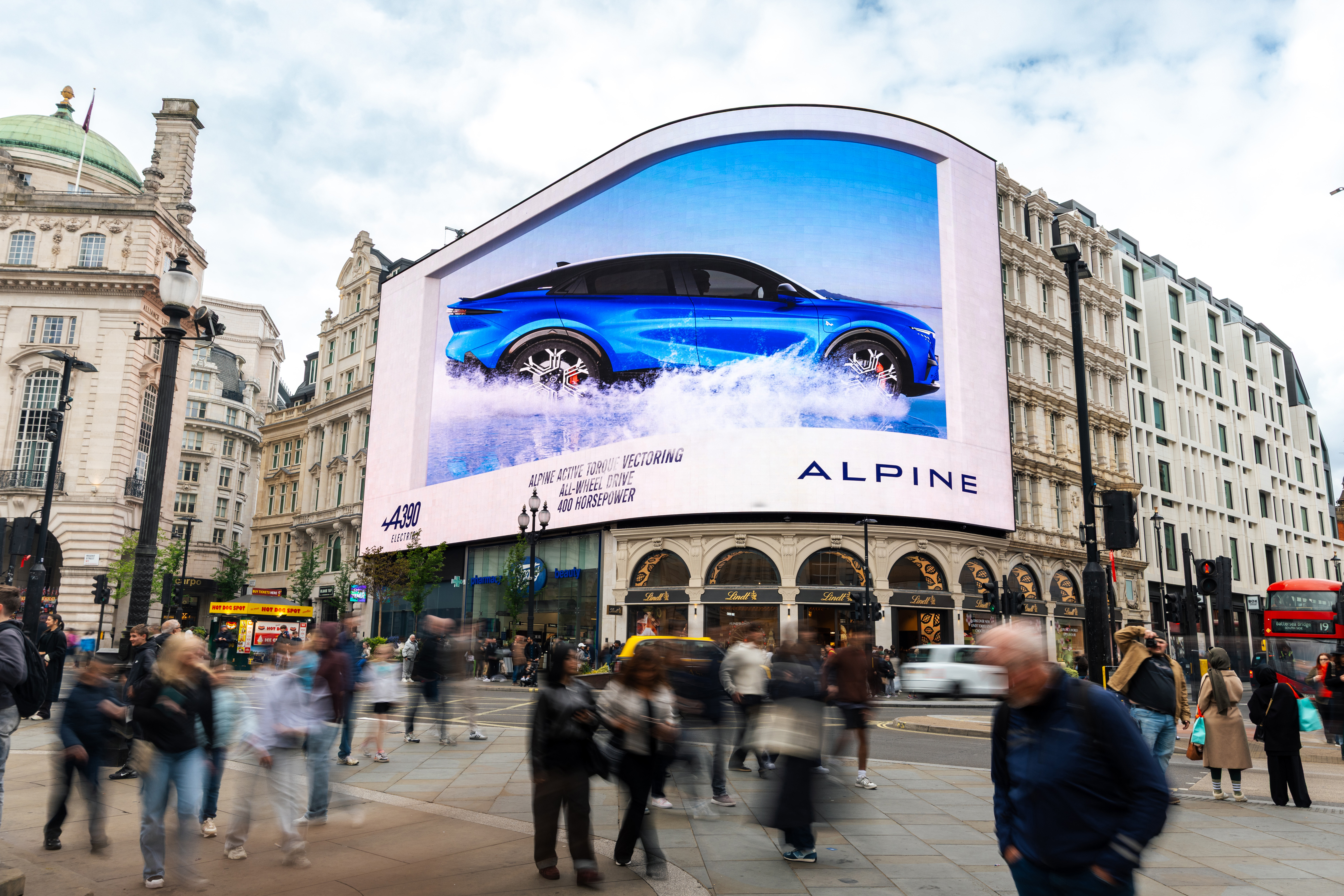
Could the entire concept be distilled into one unforgettable still image? If the answer is yes, then I build from there. Whether that’s a red goddess leaning out of Piccadilly Lights with her Versace handbag on display, or a slow-motion Alpine sports car sending a splash directly out of the screen towards the street below.
 Download
 There are definite pros and cons to AI. On the positive side, it’s allowing us to dramatically speed up processes such as rotoscoping, in-painting and object removal, making projects that previously would have taken too long far more achievable. It also gives us greater freedom to experiment creatively.
On the flip side, it can sometimes complicate the approval process. Well-meaning creatives and agencies are increasingly using AI to generate concepts that look highly realistic, which can lead clients to believe they’re viewing finished work. As a result, they might focus on details that aren’t final or struggle to visualise how the concept will ultimately evolve.
AI can also create unrealistic expectations of what animation can achieve, particularly within a given budget. If anything, I’d encourage people to use Gen AI for a rough, sketch-style concepts, rather than photorealistic renders.
In my 25 years in this industry, a lot has changed around the technology powering our screens, but the fundamental principle remains the same: make people feel something. Whether that’s surprise, happiness, sadness or excitement, focus on the human connection first and make it as simple as possible for people to engage with. Get that right and you won’t go far wrong.
I’d have to start with the unmissable 30 second Versace campaign that caught everyone’s eye in 2022. While it wasn’t the first 3D DeepScreen project we’d worked on, collaborating directly with the Versace creative team and receiving the final approval from Donatella herself helped cement our belief that DeepScreen and Ocean Studio were something special. While Versace later shared the video on Instagram, it only reinforced that feeling.
Another favourite is Santander’s Edge current account campaign on Piccadilly Lights. It wasn’t the most complex or visually flashy project, but it was built around a beautifully simple idea from House 337: transforming Piccadilly Lights into the world’s largest penny waterfall machine.
It became a real labour of love and a reminder of how varied and fascinating our work can be. What initially sounded straightforward quickly grew into something far more involved. We researched how these machines work, built a custom physics engine from scratch and then fine-tuned it to achieve exactly the right feel. That process made the final result even more rewarding.
Our first DeepScreen with Sky presented a completely different challenge. Rather than a single cohesive visual, we were tasked with showcasing the breadth of content available across Sky’s partnerships with Netflix and Discovery+, alongside Sky’s own programming. Each scene was distinct and required its own creative treatment.
I always love OOH work that responses contextually to the screen it’s running on and this campaign was a great example of this. Working closely with the Sky Creative team, we brought several iconic moments to life: Squid Game’s ‘Young Hee robot’ gazing down at the Eros statue while tracking people below; a life sized Eddie Redmayne abseiling down the building, recreating a scene from The Day of the Jackal; and a giant 3D shark bursting through the screen, complete with Back to the Future Part II vibes – to promote Discovery+’s Sharktopia. It was a fun, genuinely challenging campaign that demonstrated how 3D content can deliver real narrative, building on the proven attention uplift that DeepScreen constantly achieves.
To find out more about Ocean Studio and our creative capabilities, email david.tait@oceanoutdoor.com
Share
Ocean Networks
The location is available as part of a network, please see below for details.
Please contact us on sales@oceanoutdoor.com to find out more.